
Addiction is one of the most difficult challenges an individual—and often an entire family—can face.
But what if understanding addiction requires us to look beyond behavior and chemistry and examine what is happening within the brain, nervous system, sleep cycle, stress response, and cellular energy systems?
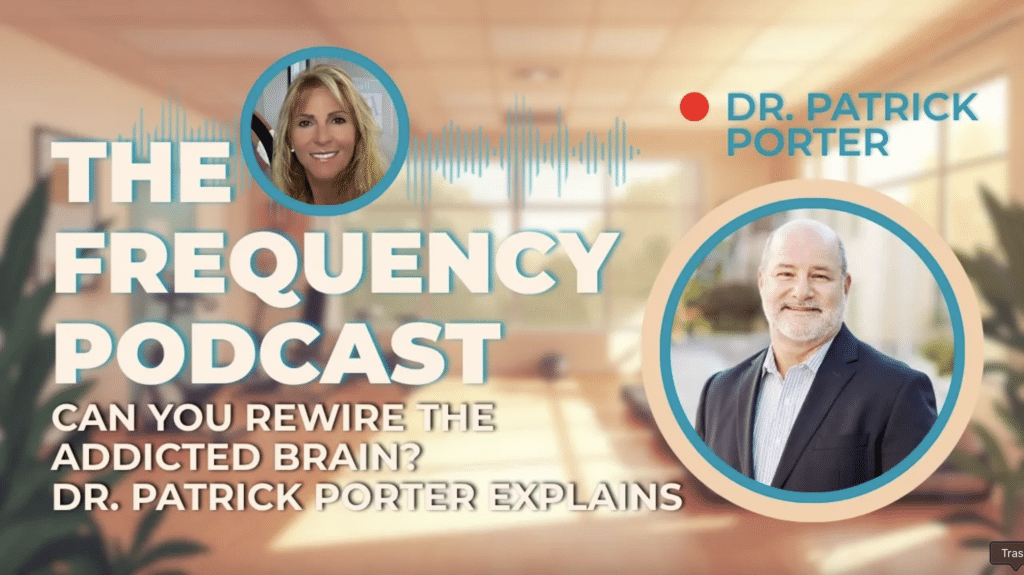
In a new VibraGenix conversation, Dr. Caroline Stites, Founder and CEO of VibraGenix, sits down with Dr. Patrick Porter, Founder and CEO of BrainTap, to explore the relationship between addiction, brainwave activity, chronic stress, sleep, trauma, neuroplasticity, and long-term recovery.
Their conversation raises an important question:
What does the brain need in order to create lasting change?
What Happens to the Brain During Addiction?
Addiction is complex. Biological, psychological, environmental, social, and behavioral factors can all play a role.
One area receiving significant attention is the relationship between addiction and the brain.
During their conversation, Dr. Porter and Dr. Stites discuss how prolonged stress and trauma can leave people spending significant amounts of time in a highly activated state commonly described as “fight or flight.”
When someone is constantly stressed, exhausted, or emotionally overwhelmed, making healthy decisions can become more difficult.
This is one reason recovery needs to address more than a single symptom. Supporting sleep, stress management, nutrition, mental health, healthy relationships, and nervous-system regulation can all be important parts of a comprehensive recovery plan.
Neuroplasticity and Addiction Recovery
One of the most fascinating topics discussed in the interview is neuroplasticity.
Neuroplasticity refers to the brain’s ability to adapt and reorganize by forming and strengthening neural connections.
Our brains are not permanently fixed.
Experiences, behaviors, repetition, learning, and environment can influence neural pathways throughout life. This is particularly relevant when discussing recovery because lasting change often requires developing healthier responses and behaviors over time.
Dr. Porter discusses the importance of helping the brain move away from highly reactive patterns and creating an environment that supports relaxation, learning, and new habits.
This is also why consistency matters.
Recovery isn’t simply about what happens during one appointment or a short program. Sustainable change requires continued support and the opportunity to practice healthier patterns in everyday life.
Why Sleep Matters for Brain Health and Recovery
One of Dr. Porter’s biggest messages during the conversation is surprisingly simple:
Start with sleep.
Quality sleep plays a fundamental role in physical and mental health. It supports memory, emotional regulation, cognitive performance, restoration, and numerous processes within the brain and body.
Yet sleep can become severely disrupted during periods of chronic stress and substance use.
Improving sleep habits and addressing underlying sleep problems with appropriate healthcare professionals can therefore be an important component of a comprehensive recovery strategy.
For anyone interested in brain health, longevity, stress management, performance, or addiction recovery, sleep should not be overlooked.
BrainTap: Using Light and Sound for Brain Fitness
Dr. Porter also explains the philosophy behind BrainTap, a brain-fitness technology that incorporates light and sound experiences designed to encourage relaxation and meditative states.
The discussion explores different brainwave patterns—including beta, alpha, and theta—and how relaxation practices may help people transition away from highly stimulated mental states.
For people interested in biohacking and wellness technology, this raises an interesting possibility:
What if technology could make it easier to intentionally create time for relaxation, meditation, and mental recovery?
BrainTap is not a treatment or cure for addiction, but technologies that promote relaxation may be incorporated as complementary wellness tools alongside appropriate professional care.
The Nervous System: Getting Out of Constant “Fight or Flight”
“Fight or flight” is a phrase almost everyone has heard.
It’s part of the body’s natural stress response and can be extremely useful when we face an immediate threat.
The problem is when we have difficulty turning that response off.
In the interview, Dr. Stites and Dr. Porter discuss wellness strategies intended to encourage relaxation and help people spend more time in a calmer state.
This is where several emerging wellness technologies enter the conversation.
Red Light Therapy and Cellular Energy
Red light and near-infrared light therapy—often referred to as photobiomodulation—have become increasingly popular in wellness, recovery, sports performance, skincare, and longevity environments.
One reason researchers are interested in photobiomodulation is its interaction with cellular processes, including mitochondrial function.
Mitochondria play an essential role in cellular energy production.
At VibraGenix, medical-grade light technology can be incorporated into a broader wellness routine alongside frequency technology, movement, nutrition, sleep, and other healthy lifestyle practices.
Green Light Therapy and Relaxation
While red light therapy has become mainstream, green light is gaining attention as another area of light-based wellness.
VibraGenix offers the Ilumia Green Light Panel, designed to provide another light-based option for people interested in relaxation, nervous-system wellness, and whole-body wellness routines.
During the conversation, Dr. Stites and Dr. Porter discuss green light in the context of creating a calmer environment and supporting relaxation.
For wellness centers already offering red light therapy, green light also provides an opportunity to expand the types of light experiences available to clients.
PEMF and Frequency Technology
The discussion also explores PEMF (Pulsed Electromagnetic Field) technology and VibraGenix sound-frequency technology as complementary wellness modalities.
VibraGenix systems combine frequency-based experiences with the ability to incorporate movement, relaxation, and other wellness practices.
Rather than thinking of any single modality as the answer, Dr. Stites emphasizes a broader approach that considers the whole person.
That can include:
- Professional medical and behavioral healthcare
- Counseling and social support
- Sleep
- Nutrition
- Movement
- Stress management
- Meditation and relaxation
- Light-based wellness technologies
- PEMF
- Sound and frequency experiences
The goal is not to replace established addiction care. It is to explore additional ways of supporting overall wellness throughout a much larger recovery journey.
Why 21 Days May Not Be Enough
Another important topic in the conversation is time.
There is a popular idea that it takes only 21 days to change a habit.
Real behavioral change is rarely that simple.
People eventually have to return to normal life, where the same relationships, stressors, environments, responsibilities, and emotional triggers may still exist.
Long-term support gives individuals more opportunities to develop and practice healthy strategies while navigating real-world challenges.
Dr. Porter and Dr. Stites discuss why they believe recovery programs should think beyond short interventions and focus instead on building sustainable lifestyles.
Could Wellness and Recovery Centers Add These Technologies?
This conversation isn’t only relevant to individuals and families.
It’s also important for professionals operating:
- Addiction recovery centers
- Behavioral wellness programs
- Integrative wellness centers
- Functional medicine practices
- Chiropractic offices
- Biohacking centers
- Longevity clinics
- Medical spas
- Performance and recovery facilities
Many modern wellness modalities are designed to integrate into an existing facility without requiring a practitioner to remain with a client throughout every minute of an experience.
That creates an opportunity for businesses to offer additional wellness experiences while allowing clinical professionals to remain focused on the services that require their expertise.
For organizations exploring wellness center equipment, red light therapy beds, PEMF systems, frequency technology, nervous-system wellness, or biohacking equipment, VibraGenix offers both individual technologies and complete-center solutions.
A Different Conversation About Addiction and Recovery
There is no single technology, medication, therapy, supplement, or lifestyle change that can solve something as complex as addiction.
But that doesn’t mean we should stop asking better questions.
What role does sleep play?
How does chronic stress influence behavior?
How does the brain create new patterns?
How can we better support relaxation?
What role does cellular energy play in overall wellness?
And how can emerging wellness technologies complement established medical and behavioral approaches?
These are the questions at the center of the conversation between Dr. Patrick Porter and Dr. Caroline Stites.
If you’re interested in addiction recovery, neuroscience, neuroplasticity, brain health, nervous-system regulation, BrainTap, red light therapy, PEMF, frequency technology, biohacking, or the future of wellness, watch the full interview above.
Explore VibraGenix Wellness Technology
VibraGenix provides advanced wellness technologies for homes, wellness centers, clinics, recovery facilities, gyms, spas, and professional practices across the United States and internationally.
Whether you’re looking for a single modality or considering building an entire wellness center, our team can help you explore which technologies best fit your goals.
Explore VibraGenix:
https://vibragenix.com/
Interested in adding VibraGenix technology to your business?
Schedule a consultation with our team to discuss professional equipment and complete wellness-center solutions.
And be sure to subscribe to the VibraGenix YouTube channel for more conversations with doctors, researchers, innovators, practitioners, and wellness leaders exploring the future of health, longevity, recovery, and human performance.
More Good Years. Not Just More Years. 💚